Official VDA Recommendation

Material Information - From documents to trusted material data

Increasing regulatory requirements, sustainability reporting and digital validation demand a new level of consistency in material data exchange.

  • Reduce manual re-entry and coordination effort across partners
  • Increase data consistency for compliance, sustainability and audits
  • Enable validated system-to-system exchange with open JSON Schema

A standardized, machine-readable data model designed for digital ecosystems. An open JSON schema enabling interoperable exchange of material and test data across industrial supply chains

Today's reality

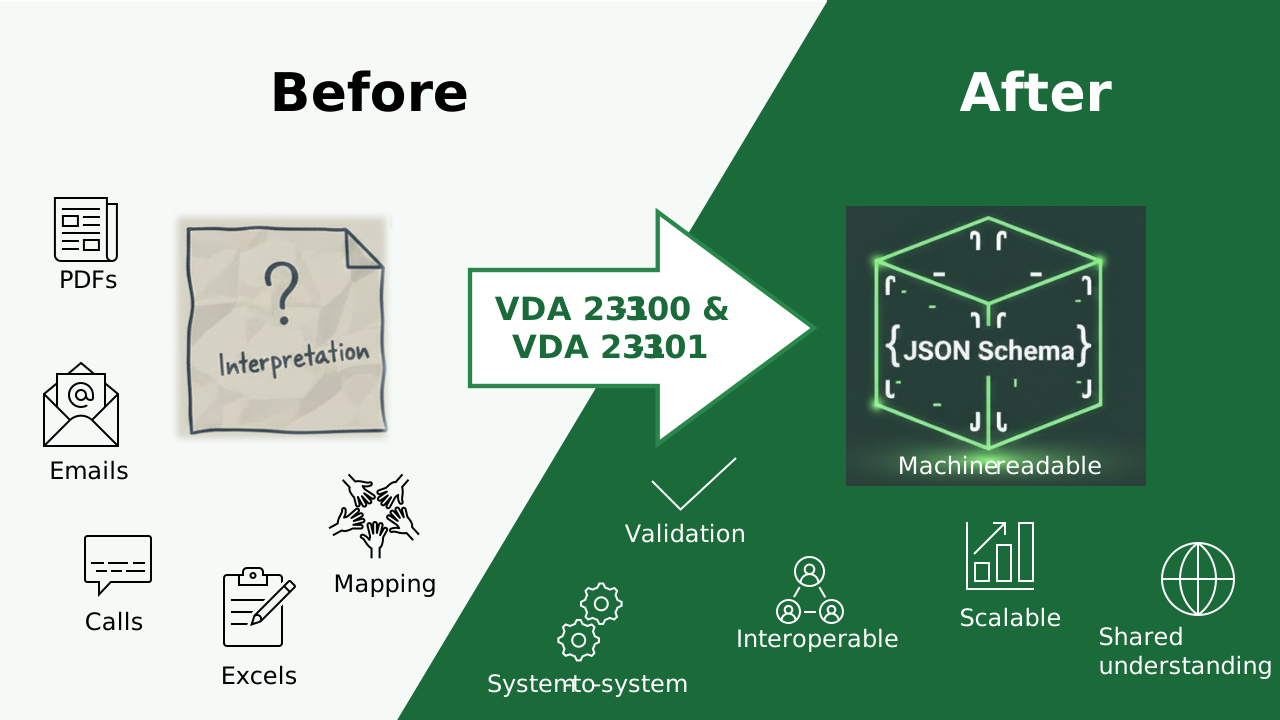
Material data exchange across the value chain remains manual, fragmented and error‑prone.

01

Manual process

  • Test planning and documentation
  • Result consolidation and reporting
  • Repeated data entry across system
02

High coordination effort

  • Manufacturers
  • Suppliers
  • Laboratories
03

Quality and Compliance risks

  • Ambiguous interpretations
  • Transcription and formatting errors
  • Costly corrections and rework

The result: fragmented data, limited comparability and increasing regulatory and compliance risk.

The standardized answer

VDA 231-300 and VDA 231-301 - A standardized, machine‑readable foundation for interoperable material data.

01

Consistent material definition

  • Standardized material and surface semantics (VDA 231-300)
  • Clear reference to 3D product data - JT / ISO 14306
  • Unambiguous basis for downstream test and compliance data
02

Interoperable test & measurement data

  • Machine-readable test and measurement results (VDA 231-301)
  • Standardized structure with formal validation rules
  • Direct system-to-system exchange without re-typing
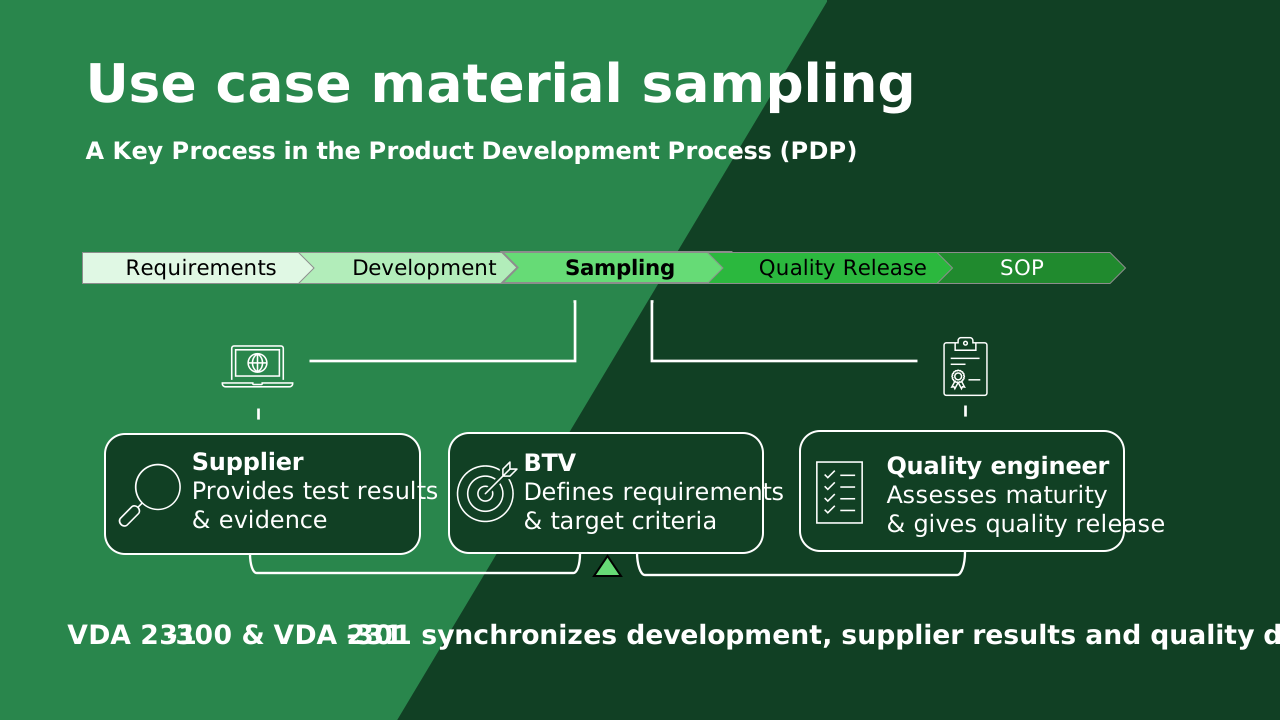
Manufacturers Suppliers Laboratories
03

Shared semantic understanding

  • Common interpretation of material and test data
  • Reduced coordination effort across companies
  • Reliable data exchange

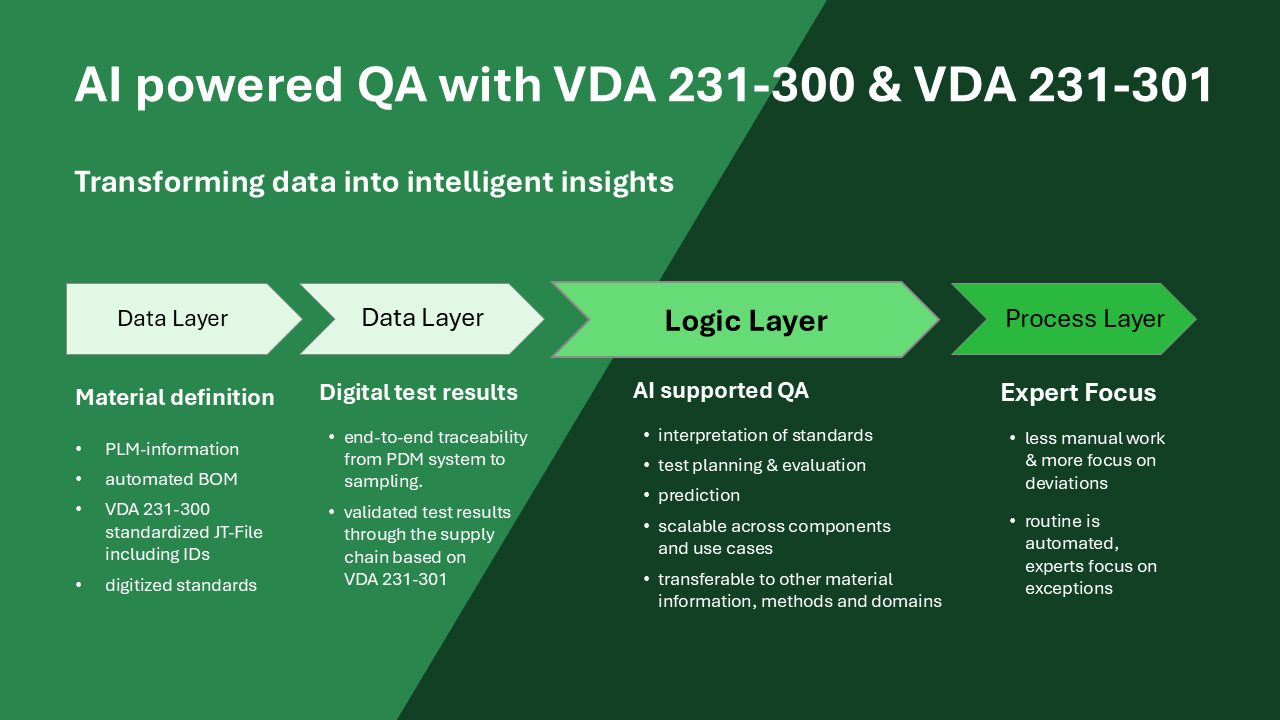
VDA 231‑300 Defines what is tested and how materials are described. VDA 231‑301 Defines how results are structured and exchanged – enabling seamless data flow without re-typing or interpretation gaps.
THE VDA RECOMMENDATION

What is VDA 231-301?

VDA 231‑301 enables interoperable, machine‑readable exchange of material and test data across systems, companies and digital ecosystems.

VDA 231‑301 is an official VDA recommendation defining a standardized, machine‑readable data model for material and test information. It addresses a key challenge in digital supply chains: reliable, interoperable exchange of material‑related data across company and system boundaries.

Built on open JSON Schema, VDA 231‑301 enables validated system‑to‑system data exchange between manufacturers, suppliers and testing laboratories. It builds on the standardized material definitions of VDA 231‑300 and extends them with a machine‑readable model for test and measurement results.

Together, VDA 231‑300 and VDA 231‑301 form a consistent foundation for structured material data exchange. They complement digital ecosystems such as Catena‑X by enabling consistent data flow without proprietary formats, manual re‑entry or interpretation gaps.

While originating from automotive requirements, the data model is generically applicable to any industry relying on structured exchange of material information. The recommendation is developed and maintained by the VDA 231‑301 Project Group through transparent, open collaboration.

VDA 231-301 schema data model diagram

Get involved

Apply the standard.
Connect your systems.
Shape interoperable material data.

VDA 231‑301 provides a standardized, machine‑readable data model for material and test information, enabling interoperable data exchange across organizations and IT systems. Replace document‑based processes with validated, system‑to‑system data exchange. Integrate the open JSON Schema into your platforms and toolchains to reduce manual effort, improve data quality and ensure reliable compliance and sustainability reporting at scale. VDA 231‑301 is developed as an open standard. Adoption, technical feedback and real‑world use cases directly shape its evolution. Join the community to contribute expertise, integrate the standard into your systems and drive long‑term interoperability across value chains.

Quick start: explore the schema, validate example files and test interoperable material data — directly in your browser.

Official VDA recommendation with industry backing
Open standard — MIT License, no vendor lock-in
JSON Schema — system‑ready and validatable
Modular subschema architecture for scalable integration

OPEN PROJECT RESOURCES

Repository Overview

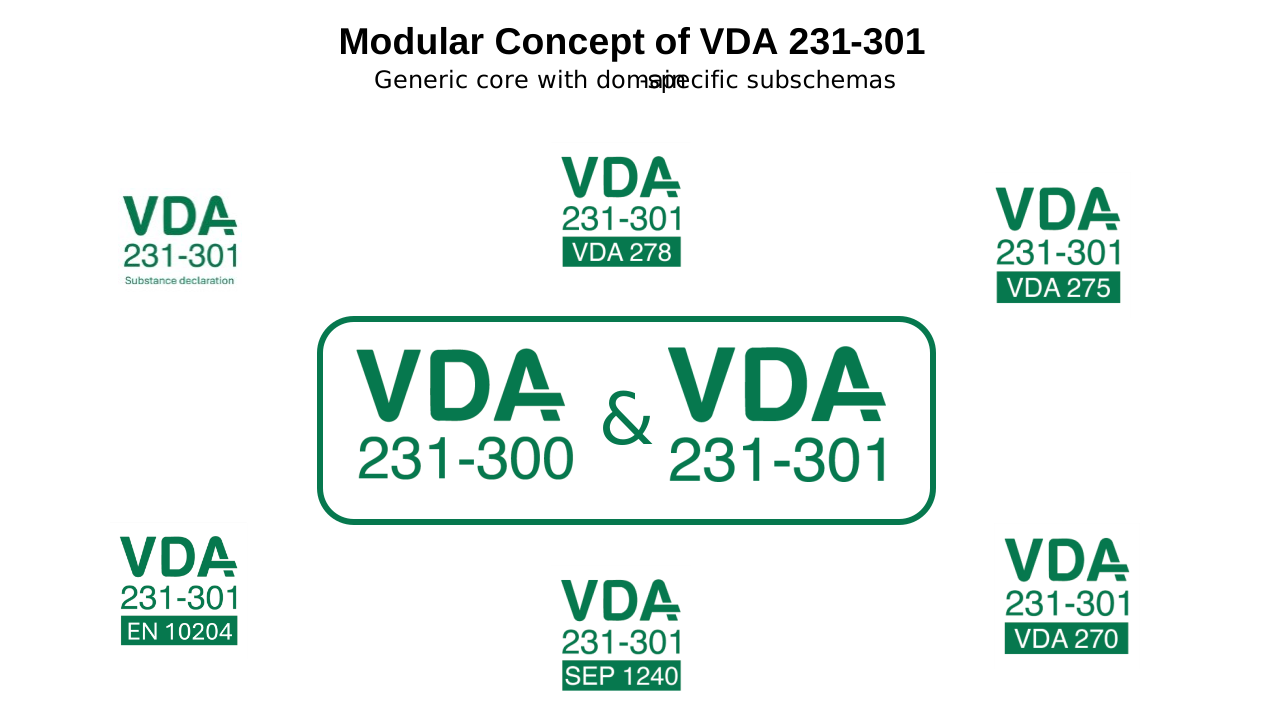
VDA 231‑301 is organized into modular subschema repositories. Each subschema covers a dedicated functional or regulatory domain.

Each subschema addresses a specific functional or regulatory domain and can be used independently or combined depending on the use case.

Subschema Repository Focus (EN) Fokus (DE)
VDA 231‑300 – Generic Material and surface definition in 3D-models in JT Material- und Oberflächendefinition in 3D-Modellen im JT
VDA 231‑301 – Generic Generic core definitions and reusable model elements Generische Basismodelle und wiederverwendbare Strukturen
Substance Declaration Structured substance and material composition data Strukturierte Stoff‑ und Materialzusammensetzungen
VDA 275 – Formaldehyde Formaldehyde emission test data Formaldehyd‑Emissionsprüfungen
VDA 278 – VOC / Fogging VOC and fogging emission test data VOC‑ und Fogging‑Emissionsdaten
VDA 270 – Odor Odor assessment based on panel testing Geruchsprüfungen mit Panelbewertung
SEP 1240 Odor‑relevant material requirements Geruchsrelevante Werkstoffanforderungen
EN 10204 Digital inspection and acceptance certificates Digitale Prüf‑ und Abnahmezeugnisse

Detailed data models, figures and examples are provided within each subschema repository .

Latest News

All news →

SEP 1240 subschema officially released

The SEP 1240 subschema has been officially released, enabling standardized digital exchange of CAE-relevant test results for steel sheets.

Read more →